Accessories for Glass-Lined Equipment

Pressure Vessel Clamp

Pressure Vessel Clamp

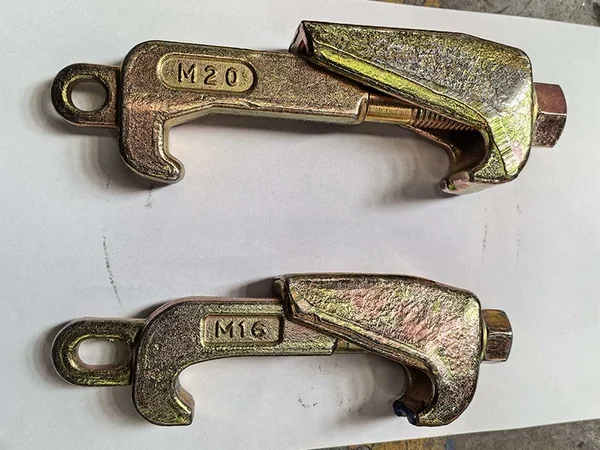
The pressure vessel clamp secures the connection between the vessel body and the vessel cover on a glass-lined reactor. By replacing traditional bolt-and-nut fastening methods, the pressure vessel clamp helps maintain reliable flange sealing, support a pressure-tight connection, and reduce the risk of leakage during operation.

Request a Quote →

The pressure vessel clamp is suitable for operating temperatures from -20°C to 200°C and for design pressures of ≤1.0 MPa. Available materials include forgings, alloy steel, cast steel, and other suitable options, with material selection based on the required pressure rating.

As a key fastening component for glass-lined reactors, the pressure vessel clamp is designed to meet the sealing requirements of glass-lined flange connections and plays an important role in maintaining vessel pressure integrity and leak prevention.
Contact Us

Ready to Start A Project?

Please contact Lante for custom glass-lined steel equipment designed to meet your specific needs.

Ready to Start A Project
Why Us

Why Us

  • Certified manufacturing standards
    We hold authoritative ASME (Section VIII Division 1) and CE (PED) certifications, ensuring full compliance with international safety and quality standards. This guarantees our glass-lined steel equipment meets the strict regulatory requirements of global chemical, pharmaceutical, and agrochemical clients.
  • In-House Enamel R&D Laboratory
    Our dedicated in-house R&D center specializes in custom enamel formulations, including acid-resistant, acid-alkali resistant, high-temperature resistant, and wear resistant options. These proprietary formulas deliver exceptional durability against corrosive media, mechanical impact, and thermal shock, ensuring reliable performance in diverse operating environments.
  • Advanced Cold Spray Enameling Process
    Our glass-lined equipment utilizes advanced cold spray enameling process with multiple high-temperature firing cycles. This technology ensures a thinner, more uniform, and denser enamel layer with significantly reduced risk of chipping or peeling. The controlled firing process guarantees optimal adhesion and long-term durability in the most demanding chemical processing conditions.
  • Precision Belt Polishing Pretreatment
    Prior to enameling, every steel shell undergoes rigorous precision belt polishing to thoroughly remove mill scale, pits, and surface impurities. This meticulous pretreatment process ensures superior substrate smoothness and integrity, providing an ideal, contamination-free foundation for strong and uniform enamel bonding.
  • Multi-zone electric furnace control
    The enameling furnace uses independent multi-zone control with computerized management of heating, holding, and cooling. The temperature difference inside the furnace is controlled within 5°C, helping maintain consistent firing quality.
  • Vertical firing process
    All equipment is produced using a vertical firing process, which provides more even heating, reduces deformation, and helps maintain the overall appearance of the equipment as well as flange flatness.
  • Controlled slow firing curve
    The firing process follows a low-temperature entry and low-temperature exit slow-firing curve. Combined with dedicated furnace tooling and controlled firing methods, this helps ensure enamel quality comparable to that of established international manufacturers.
  • Full-process quality management
    We maintain a complete quality management system with full-process control. For glass-lined quality inspection, we apply three inspection procedures covering:
    1. internal and external visible defects
    2. enamel thickness
    3. high-voltage spark testing
    This helps ensure that delivered products meet required standards and specifications.
  • Custom non-standard equipment design and manufacturing
    Custom design and manufacturing support is available for non-standard products. Based on different process requirements, tailored solutions can be developed for special equipment structures and agitator selection supported by CFD fluid dynamics simulation.
  • Strong R&D capability
    We have strong research and development capacity and currently hold more than 40 national patents covering equipment tooling, products, and manufacturing processes.