


Glass-Lined Piping & Fittings
(Glass Lined Pipe, Glass Lined Fittings)
Our glass-lined piping and fittings are available in sizes from DN25 to DN600, engineered for the safe transfer of corrosive, contamination-sensitive, and high-purity fluids. Constructed from premium metallic substrates (such as ASTM A106 Gr.B carbon steel or stainless steel) with a high-silica glass lining fused at high temperature, they deliver exceptional corrosion resistance, wear resistance, anti-adhesion, insulation, and anti-static performance. Fully compliant with ASME B31.3 and PED 2014/68/EU standards, they are ideal for chemical, pharmaceutical, food, and agrochemical fluid transfer systems.
Request a Quote →
Features
- Complete range of piping components
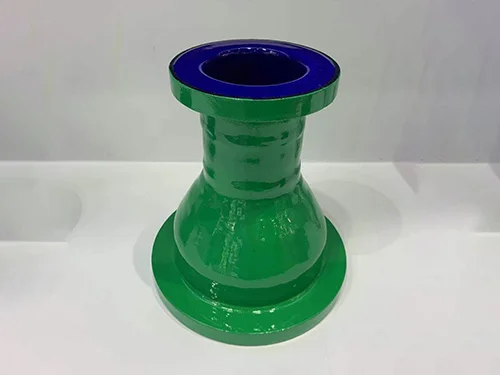
Glass-Lined Piping, also known as enameled piping, includes straight pipes, elbows (30°, 45°, 60°, 90°, 180°), tees, crosses, reducers, spacers, and blind flanges. - Flexible connection methods
The pipe ends are available in nozzle-end and flange-end structures. Pipes with a nozzle-end structure are used together with lap joint flanges, while pipes with a flange-end structure can be connected directly to other piping or equipment. - Convenient installation design
The nozzle-end structure can be combined with an integral lap joint flange, making installation more convenient.
Manufacturing Process
- Base material preparation
Materials such as No. 10 or No. 20 seamless steel pipe are selected as the substrate. The base material must have uniform thickness, a smooth surface, and no cracks. - Pretreatment
The substrate undergoes pre-firing and sandblasting treatment to improve the bonding strength between the enamel glaze and the metal substrate. - Enamel application
The enamel glaze is evenly applied to the inner wall of the steel pipe by methods such as rolling or spraying. - Firing process
The coated pipe is fired in a high-temperature kiln so that the enamel glaze bonds tightly to the metal substrate. - Inspection and testing
The finished products undergo visual inspection, thickness measurement, and corrosion resistance testing to ensure compliance with standards such as GB25025 technical specifications for glass-lined equipment.